Audience
Leaders of mid-size enterprises
Hours, Not Months — Part 10. The series has shown what a mid-market finance team can build with EAConnect and how fast. This part answers the question every CFO asks next: what does it cost, and compared with what?
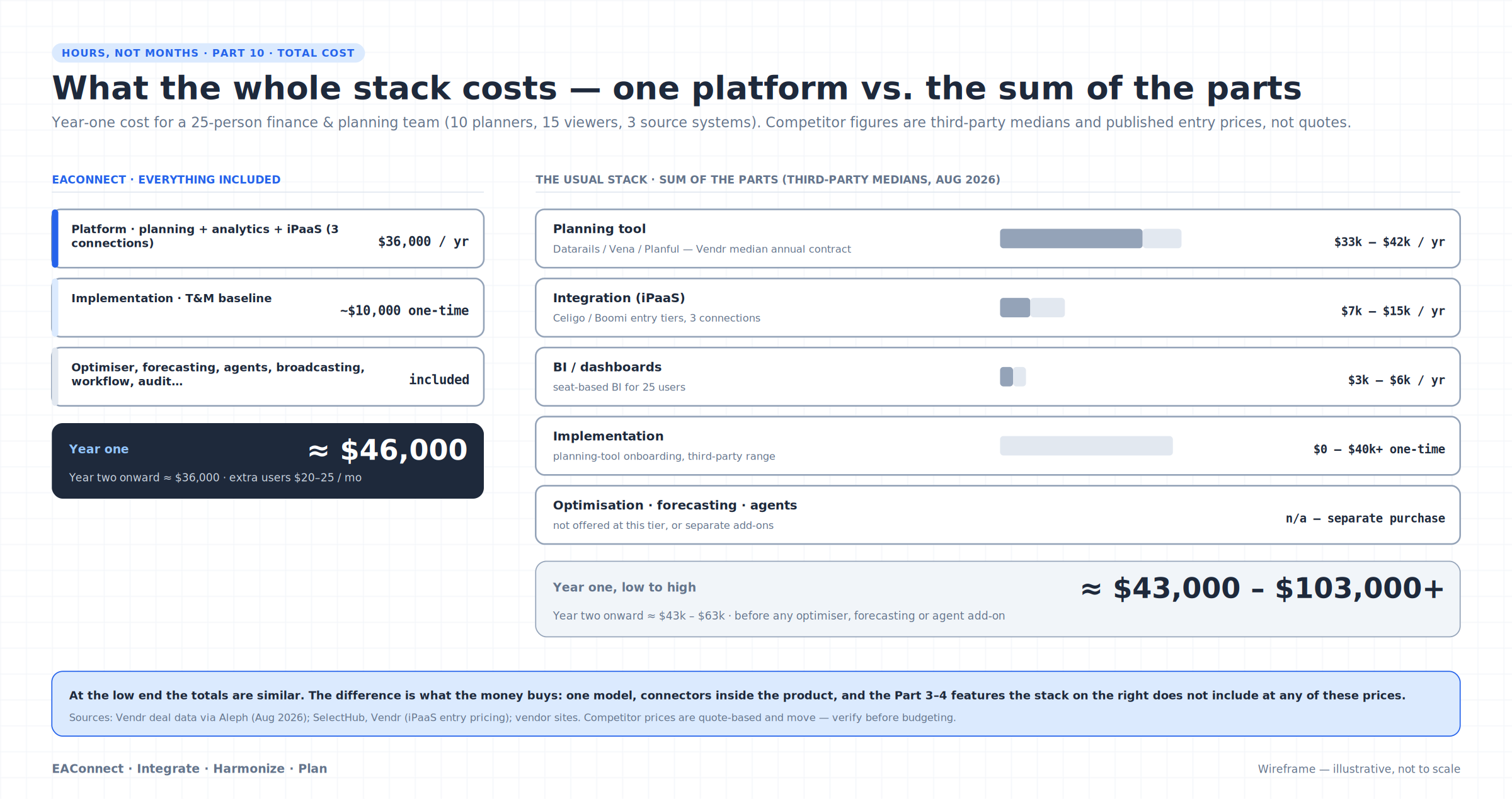
Figure 1. One platform vs. the sum of the parts
Finance software is almost never priced in public. Of the ten platforms that appear most often on mid-market FP&A shortlists, one publishes a rate card; the rest route you to a demo call. That makes "how does this compare" a question buyers answer by anecdote — the quote a peer got, the number a consultant mentioned.
We are going to do it differently. EAConnect's pricing is stated below, in full. The competitor figures are third-party medians and published entry prices as of August–September 2026, with the source named, so you can check them. Where a number is a range, it is because the sources disagree, and we show the range rather than pick the flattering end.
For a finance and planning team of 25 — 10 planners who enter and model, 15 viewers who consume reports and dashboards — with three connected source systems:
| Item | Amount |
|---|---|
| Platform: planning, analytics, integration (3 connections), all features in this series | $36,000 per year ($3,000 per month) |
| Implementation: time and materials, typical baseline | ~$10,000 one-time |
| Year one | ≈ $46,000 |
| Year two onward | ≈ $36,000 |
Larger deployments — more entities, more connections, high data volumes — are quoted individually.
Everything covered in Parts 1–9 is in the platform price: the statements, dashboards and planning grids of Part 1; the native connectors of Part 2; the hierarchies, calendars, currency translation, broadcasting, audit, workflow and agents of Part 3; the optimiser of Part 4. There is no module list.
A mid-market team that wants the same outcome without EAConnect assembles it from three or four products. Here is what each costs, from the best public data available.
Planning tool. Vendr, which publishes anonymised deal data, put the median annual contract at $33,300 for Datarails, $34,286 for Vena and $42,403 for Planful as of August 2026, with Pigment at $74,000 and Anaplan at $114,609. Independent guides place the mid-market band for this tier at roughly $20,000–$75,000 a year before implementation. We use $33,000–$42,000 — the three tools most often shortlisted against EAConnect.
Integration. Planning tools connect to one or two ERPs natively; anything beyond that means an iPaaS. Published entry pricing is $550 per month for Boomi and $600 per month for Celigo, both quote-based above that, with costs rising with volume and flow count. Three connections at entry tiers: roughly $7,000–$15,000 a year.
BI and dashboards. Planning tools' built-in reporting is rarely what the CFO's dashboard runs on. A seat-based BI tool for 25 users is in the region of $3,000–$6,000 a year.
Implementation. Third-party guides put planning-tool onboarding at $0 to $40,000+ depending on the vendor, and first-year all-in figures for Vena at $60,000–$150,000 including implementation. We use $0–$40,000.
Optimisation, statistical forecasting, insight agents. Not offered at this tier, or sold as separate add-on modules. Left out of the total because there is no like-for-like price — which is itself the point.
| Item | Low | High |
|---|---|---|
| Planning tool | $33,000 | $42,000 |
| Integration (3 connections) | $7,000 | $15,000 |
| BI | $3,000 | $6,000 |
| Implementation (one-time) | $0 | $40,000 |
| Year one | ≈ $43,000 | ≈ $103,000+ |
| Year two onward | ≈ $43,000 | ≈ $63,000 |
At the low end, the totals are close: a well-negotiated Datarails or Vena contract with a light implementation and a cheap iPaaS lands near EAConnect's $46,000. We are not going to claim otherwise.
Three things separate the columns.
What the money buys. The low-end stack is a planning tool, two or three connectors, and a dashboard. It does not include versioned hierarchies, multiple fiscal calendars, currency translation, scheduled broadcasting with per-recipient filtering, an audit log, a workflow engine, insight agents, or an optimiser. Some of those are add-on modules from the same vendors at additional cost; some are simply not available in this band. Everything on that list is in EAConnect's $36,000.
The seams. Three products means three logins, three data models, three support contracts and the reconciliation between them — the "planning numbers vs. reporting numbers" problem that every finance team with a separate BI tool knows. That cost does not appear on an invoice, but it appears in month-end.
Year two. Implementation is one-time; the seams are annual. From year two the range is $43,000–$63,000 for the stack against $36,000 for EAConnect, and the gap widens over time — EAConnect provides predictable all-inclusive planning without hidden licensing tiers, while legacy planning tools price power users and modules at substantial multiples.
For roughly what a mid-market team pays for a planning tool alone, EAConnect provides the planning tool, the integrations that feed it, the analytics that sit on it, and the features — optimisation, forecasting, agents, governance — that the alternatives either sell separately or do not offer. Implementation is measured in days and priced in the low five figures. From year two, the comparison is not close.
Sources: Vendr deal data as reported by Aleph, "How much does FP&A software cost?" (August 2026); Metapraxis, "Best FP&A Software 2026"; SelectHub, "Boomi vs Celigo" (January 2026); Vendr marketplace pages for Boomi and Celigo; checkthat.ai Datarails pricing guide (March 2026). All competitor figures are third-party estimates or published entry prices, not vendor quotes.